-(600-600,-)-(280-80,-)-(280-40,-)-(280-80,-)-(460-111,-)-(1).webp?w=460&h=111)


You carried baby for over nine months—nine+ long months of reading about baby’s week-by-week development, stocking up on newborn essentials and learning how to care for an infant. And then it happened: Your water broke, baby came and life as you knew it changed forever.
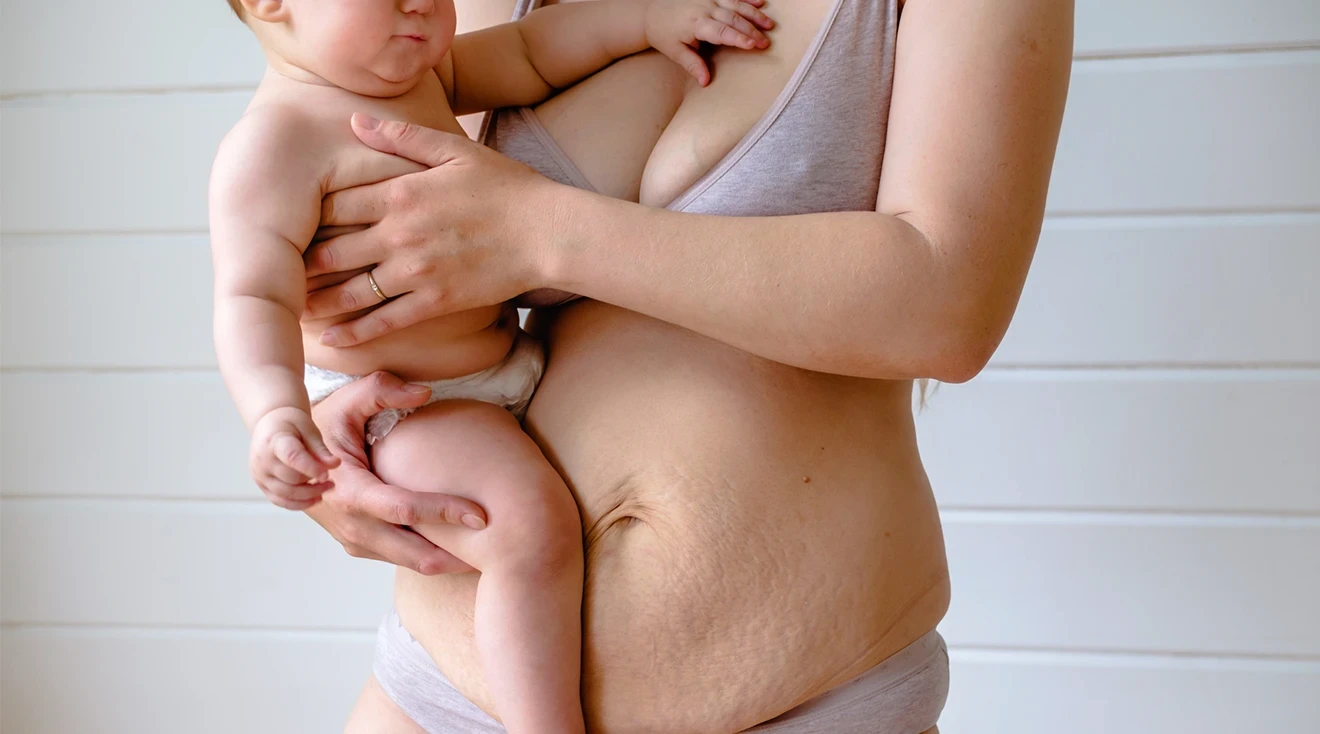
Of course, by then you were prepped and ready for all the changes baby was about to go through. But how prepared were you for the toll it would all take on your body? While pregnancy is a miraculous time, it can change your body in many ways. If you’re feeling uncomfortable in your skin following baby’s birth, know you’re definitely not alone. While it’ll take some time to adjust, you can learn to love your postpartum body—and there are so many reasons why you should.
Your Postpartum Body: Changes to Expect
Feeling uneasy in your postpartum body? This moment of uncertainty affects almost all new mamas (even those who seemingly have an easier time with postpartum recovery). After all, there’s a laundry list of physical transformations women experience during pregnancy and postpartum, says Sherry Ross, MD, an ob-gyn, women’s sexual health expert, and co-founder of Oneself Intimate Skin Care. “Through a bombardment of hormonal changes, the body prepares, carries, and grows a full-term baby over nine months,” Ross says. “During this transformational time, our miraculous bodies go through the necessary physical changes, for better or for worse, to prioritize the growth and development of a small human being.” But some of these can stick around for a few weeks or even months (or years!) after the baby’s birth. Read on to learn more about what to expect from your post-pregnancy body.
How to Adjust to Your Postpartum Body
Some good news? Though your body will undergo several changes during those nine+ months, some occur due to hormonal shifts and will normalize within the first few weeks or months after delivery. “It’s important to remember [this is] a temporary time in a person’s life,” Ross says. “Pregnancy can be one of the most joyous, magical and life-changing moments people go through. I tell my patients to enjoy the ride and give yourself a two-year pass to allow your body to work its magic and slowly find its way back to normalcy.” Of course, some changes may stick around for longer, but it’s important to acknowledge them for what they are: a reminder of the remarkable feat your body just pulled off. Below, some tips on how to love your postpartum body.
My biggest takeaway, three years postpartum, is that sometimes your postpartum body changes in ways that aren’t predictable or like everyone else. I haven’t really dealt with weight issues, stretch marks or hair loss. But I do have complicated back and pelvic floor issues from carrying a 10-pound baby. Right now, I’m really focusing on strengthening my core to heal everything. My advice is to realize that everything in the body is related—and that getting to the root of your symptoms may take a while (I’m still getting there), but it’s really worth it.
— Natalie G., The Bump senior editor and mom of one
Stop comparing yourself to others
You’ve probably heard this one before, but it still bears repeating: If it took nine+ months to gain the baby weight, you can’t expect it to vanish overnight. According to Jennifer Wider, MD, a women’s health expert and author of The New Mom’s Survival Guide, women are often too hard on themselves, both before and after baby. “We’re always comparing ourselves to the images we see in the media, trying to live up to some unrealistic body type,” says Wider. “Women need to give themselves a break!”
Allow yourself time for self-care
While caring for baby is super important during the fourth trimester, you can’t forget to care for yourself too. Schedule in some “me” time at least once a week. Leave baby with your partner or a trusted loved one for an hour or two and do something that makes you feel good. Get a mani-pedi, go to a museum, grab some lunch with a friend or simply take that much-needed bubble bath. Allowing yourself time for small things that make you feel good will help you be more comfortable in both your new skin and in your new role.
Communicate with your partner
Intimacy might not be the first thing on your mind during those first few weeks or months with baby. After midnight feedings, messy diaper changes and answering baby’s every cry, you’re bound to feel wiped. Add on the amount of recovery time you’ll need after birth (usually six to eight weeks), and sex may not be high on your priorities. Still, it’s important to communicate any uncertainty you have around your postpartum body to your partner. It may be uncomfortable, but they’re on this journey with you, and talking out your feelings with them might help you move past some of the insecurities. “Your partner will certainly support you,” says Wider. “But sometimes you’ll have to spell out exactly what you need: love, acceptance and support.”