-(600-600,-)-(280-80,-)-(280-40,-)-(280-80,-)-(460-111,-)-(1).webp?w=460&h=111)

Postpartum Belly Wrap Benefits
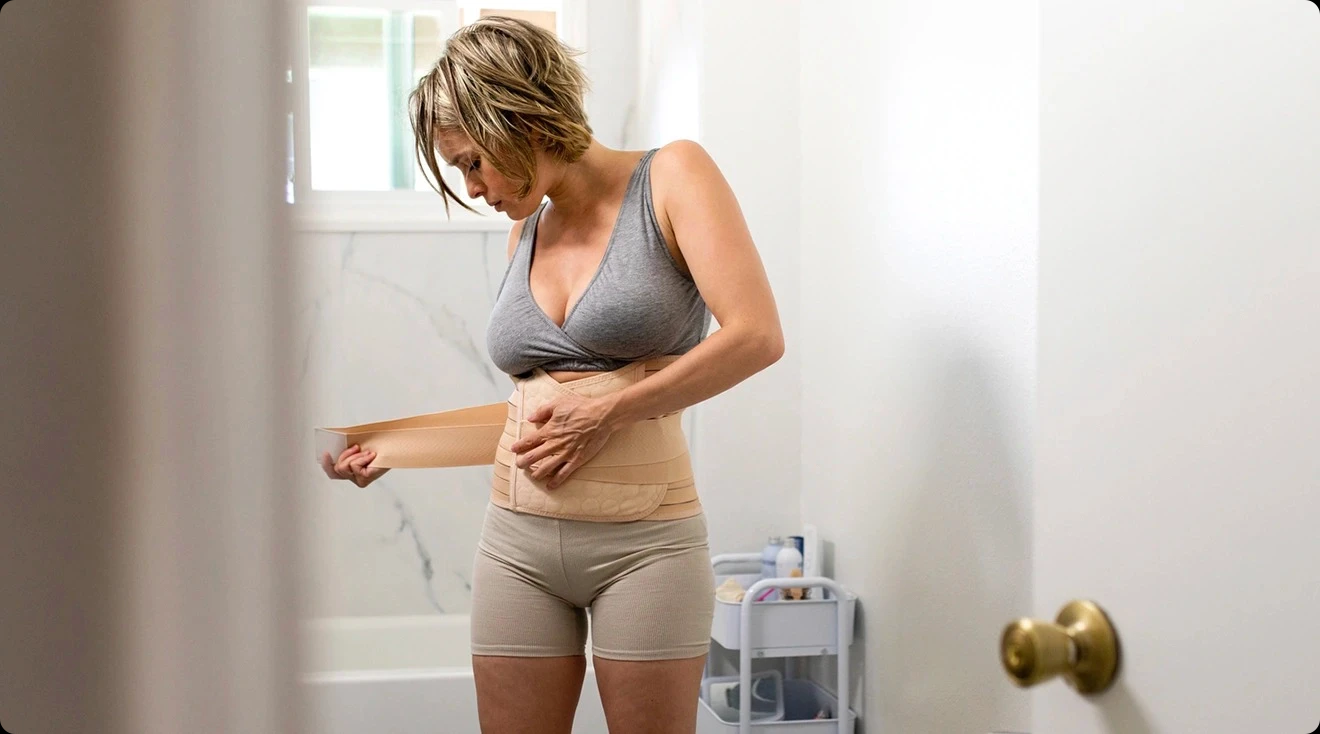
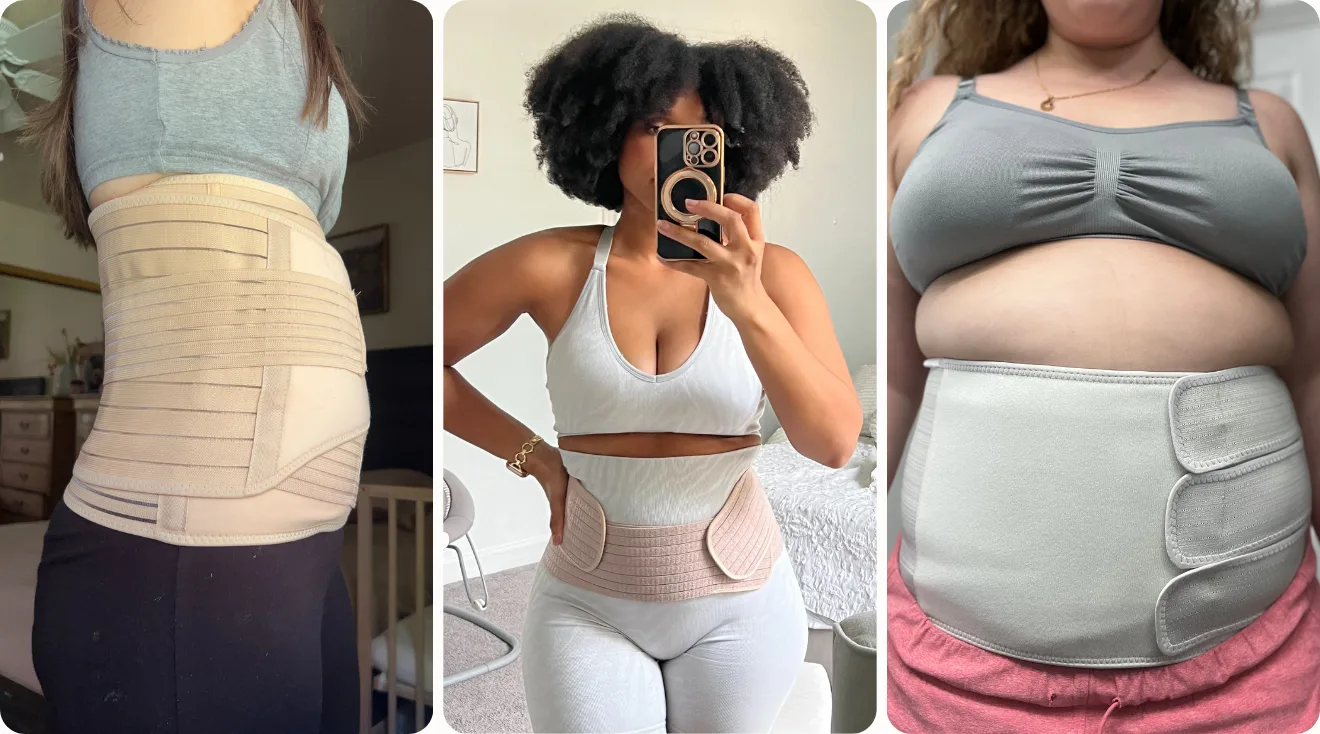
The technical term for a postpartum belly band is a postpartum abdominal binder—and these products do just that. They offer compression and support for the abdomen and lower back, and may also improve circulation and breathing. Such binders have been prescribed by doctors for years following abdominal surgeries—including C-sections—, but over the past decade, belly wraps designed specifically for postpartum women have flooded the market. They come in several styles (postpartum girdles, belts, pull-ons, and more) and with different closures (Velcro, zippers, and hook and eye, among others), but the primary benefits of postpartum belly wraps remain the same across the board. According to Sharma, postpartum belly wraps can offer new moms the following:
Support
A postpartum belly wrap’s greatest benefit is providing support for new mothers as their bodies recover following birth. “For example, if a new mom is suffering from diastasis recti,” a fairly common condition postpartum in which the vertical abdominal muscles remain separated at an abnormally wide distance following pregnancy, “a belly band can take the pressure off of the abdomen,” explains Sharma.
Moreover, belly bands are also helpful in taking pressure off your abdomen while you breastfeed (if that’s the feeding journey you’re planning for). “If a new mom is breastfeeding, she may feel uterine contractions as the uterus works to become smaller in size,” Sharma explains. Cramps and surgical pain are no picnic, but a postpartum belly wrap can offer some physical relief,f as cushioning from the wrap can protect the site from damage or strain.
Pain relief
Labor and delivery, be it a vaginal or cesarean birth, puts your body through the wringer—and that’s after an already demanding nine+ months of pregnancy. Just as an athlete needs to recover and tend to any aches, pains, soreness, ss or swelling after a big game, so do new moms. “Postpartum belly wraps can help support the lower back and pelvic floor, assisting with any discomfort and pressure you may feel after having a baby,” Sharma says. The pelvic floor is the collection of muscles, ligaments,nts and tissues that span the area between the pubic bone at the front of the pelvis and the coccyx (tailbone) at the back and support pelvic organs such as the bladder,uterusts and rectum. It stretches during pregnancy and the birth process and can become weak as a result of acute, prolonged strain. “Hip pain is very common as the pelvic floor realigns with the postpartum body, and wraps can be extremely helpful with this as well,” explains Sharma. Belly binders offer stability to the pelvis and lower spine to aid in posture, balance, and overall movement.
Swelling reduction
In the first two weeks postpartum, Sharma says your body “is working to get rid of the extra fluid that it retained during pregnancy.” Simultaneously, the uterus gradually contracts to return to its pre-pregnancy size in a process called involution. The compression a postpartum belly wrap provides can prevent the accumulation of excess fluid and promote better overall circulation.
C-section healing
A C-section is a major surgery, and post-procedure,edure new moms can experseveralber of symptoms caused by the disruption of tissues in the abdominal area. Sharma says postpartum belly wraps can be helpful during cesarean recovery because they offer “lower back and abdominal wall support, especially for the first 30 to 60 days as the abdominal incision is healing.” Maintaining proper alignment and posture supports optimal healing of the incision site, as does gentle compression. In fact, a recent NIH trial found that postpartum belly wraps improved moms’ mobility after a C-section and reduced their pain and post-operative symptoms and distress.
One thing postpartum belly wraps and bands won’t do? Magically scale your waist down to its pre-pregnancy size. That happens gradually through diet, exercise, and time. However, a belly wrap may help provide a smoother appearance under clothes, similar to what happens with shapewear. Sharma encourages every postpartum mom to remember that “your journey will be different from everyone else; even though a lot of wraps focus on ‘aesthetics’ and the idea of bouncing back, you want your wrap to be what works best for you, not necessarily what will 'get your body back.’”
Are Postpartum Belly Wraps Safe?
“Postpartum belly wraps are safe for most women when used correctly,” says de la Torre. She says postpartum belly wraps “should never be too tight, as excessive compression can restrict circulation, breathing, or proper healing.” As an overall rule, according to Sharma, if a wrap is “causing increased pain or difficulty with breathing, that is a concern, and I would recommend discontinuation.” To avoid adverse effects, Sharma stresses the importance of selecting “one that works best for your body type.”
While most people can use belly wraps during their postpartum recovery, there are a few exceptions. “Women with high blood pressure, circulation issues, or deep vein thrombosis (DVT) should avoid them or consult their doctor first,” explains de la Torre. “Additionally, those recovering from certain complications—like severe diastasis recti or infections from surgery—should ask their medical professional before using one.”
What to Look for in a Postpartum Belly Wrap
Choosing a wrap that is comfortable and designed for postpartum recovery is crucial. Sharma suggests “finding one that has breathable fabric, is comfortable under clothes, that can be worn throughout the da,y and can be relatively easily washed.” Here’s a closer look at the important features to consider as you shop for a postpartum belly band that will work for you:
- Comfort. An effective postpartum abdominal wrap should offer compression. That said, you want something supportive, not a suffocating “waist trainer” or constrictive corset. (The goal is to alleviate pain, not cause it!) Look for adjustable, stretc,hy and breathable styles that can adapt to your specific body. As a guideline, de la Torre suggests choosing wraps that “feel snug but comfortable, allowing for natural movement.”
- Soft fabrics. Your healing skin may be more sensitive, so de la Torre says it’s important to prioritize belly wraps made from soft and breathable material. She adds that if you’ve had a cesarean birth, “it’s essential to choose a wrap designed for C-section recovery—one that’s soft, breathable and doesn’t press directly on the incision.”
- Easy to adjust. According to de la Torre, the best postpartum belly wraps are adjustable, allowing for an adaptable level of support as your body heals and swelling goes down.
- Ease of use. If your post-pregnancy belly wrap is a pain to put on, you simply won’t use it. The same is true if it’s a struggle to wear while you’re completing your day-to-day tasks. Settle on a postpartum belly wrap that doesn’t disrupt your life with difficult closures or annoying, hard-to-adjust bands. Only you know what you’ll find frustrating, so consider your tolerance for complicated design.
- Discreetness. Some postpartum belly bands are more seamless than others (think: sleeve-like bands versus multi-fastener girdles). If you like to wear fitted clothes, keep that in mind. You can also search for skin-toned styles for more of a no-show look. Many products come in a variety of neutral and versatile colors.
- Targeted support. Approaching postpartum belly wrap therapy as a one-size-fits-all solution has its limitations. Consider your own pregnancy and any prior birth experiences to hone in on the specific type of support you’ll likely need. “For example, if you’re having a repeat cesarean section, finding a belly band that offers more abdominal wall support and lower back support may be more important,” Sharma says. Alternatively, if you’ve had a vaginal delivery previously, “your pelvic floor may be even weaker, and you may suffer from more pelvic floor laxity” this time around. She tells us that in this case, having a band with a particular and targeted focus on the pelvic floor can prove more useful.